

Key to the Exotic Ants (Hymenoptera: Formicidae) of Mississippi [PDF] [Poster Format PDF]
Nicole Rasoamanana and Joe A. MacGown
Department of Agricultural Science and Plant Protection
Mississippi State University, MS
Uploaded on 23 October 2026
1 Body with a single isolated waist segment (petiole) between mesosoma and gaster; petiole sometimes reduced or partially concealed (Fig. 1A) …..2
– Body with two isolated waist segments (petiole and postpetiole) between mesosoma and gaster (Fig. 1B) ……14
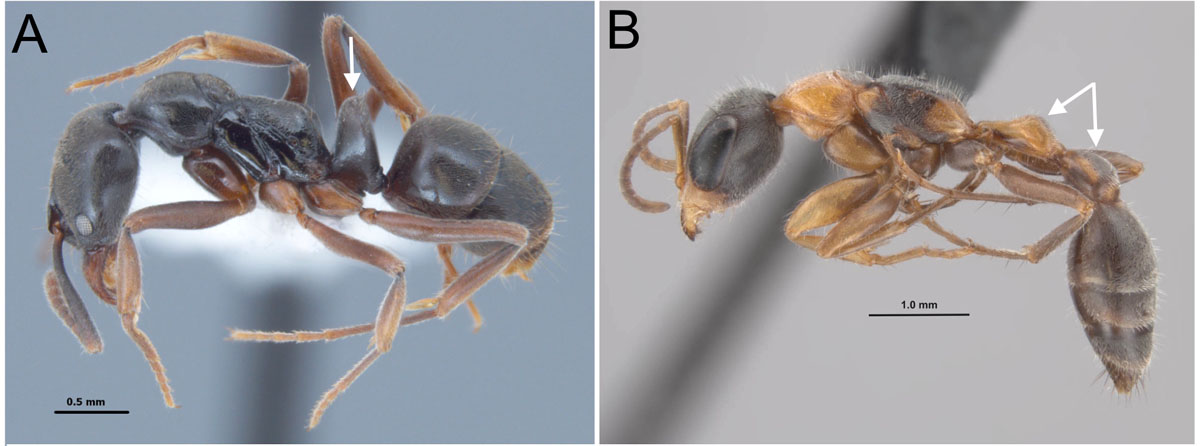 Figure 1. Body in lateral view. (A) Brachyponera chinensis; (B) Pseudomyrmex gracilis.
2 (1) Sting absent; abdomen without a distinct constriction between abdominal segments III and IV (Fig. 2A, B) ..…3
– Sting present and functional; abdominal segments III and IV usually separated by a constriction (Fig. 2C); if constriction indistinct, mandibles long, linear, and inserted near middle of anterior head margin .….10
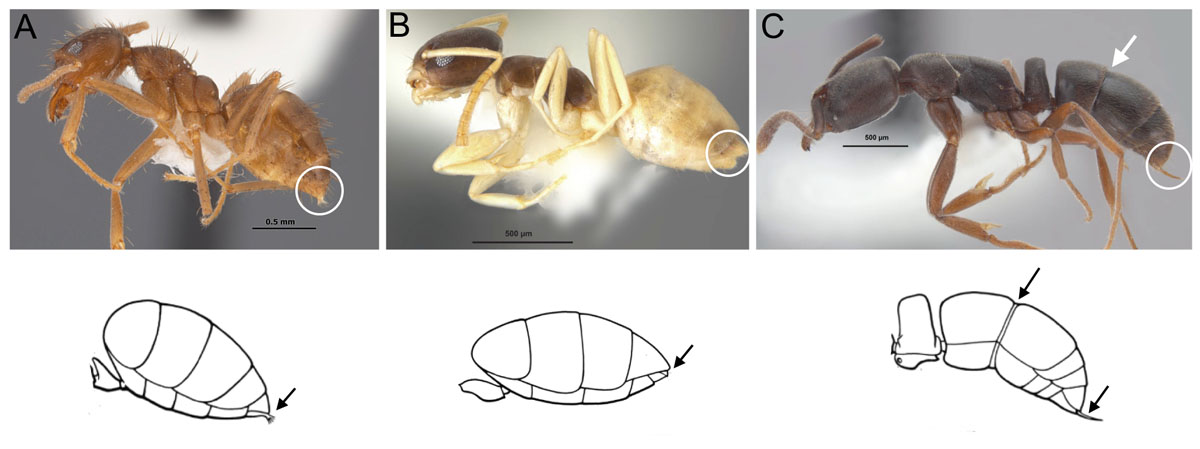 Figure 2. Body in lateral view. (A) Nylanderia fulva; (B) Tapinoma melanocephalum; (C) Hypoponera opaciceps.
3 (2) Gastral apex with a circular or semicircular acidopore, usually fringed with hairs (Fig. 3A); if fringe absent, antennal insertions well behind posterior clypeal margin (Camponotus) …..4 (Formicinae)
– Acidopore absent; gastral apex with a transverse slit-like opening, without surrounding fringe of hairs (Fig. 3B); antennal insertions at or near posterior clypeal margin ..…9 (Dolichoderinae)
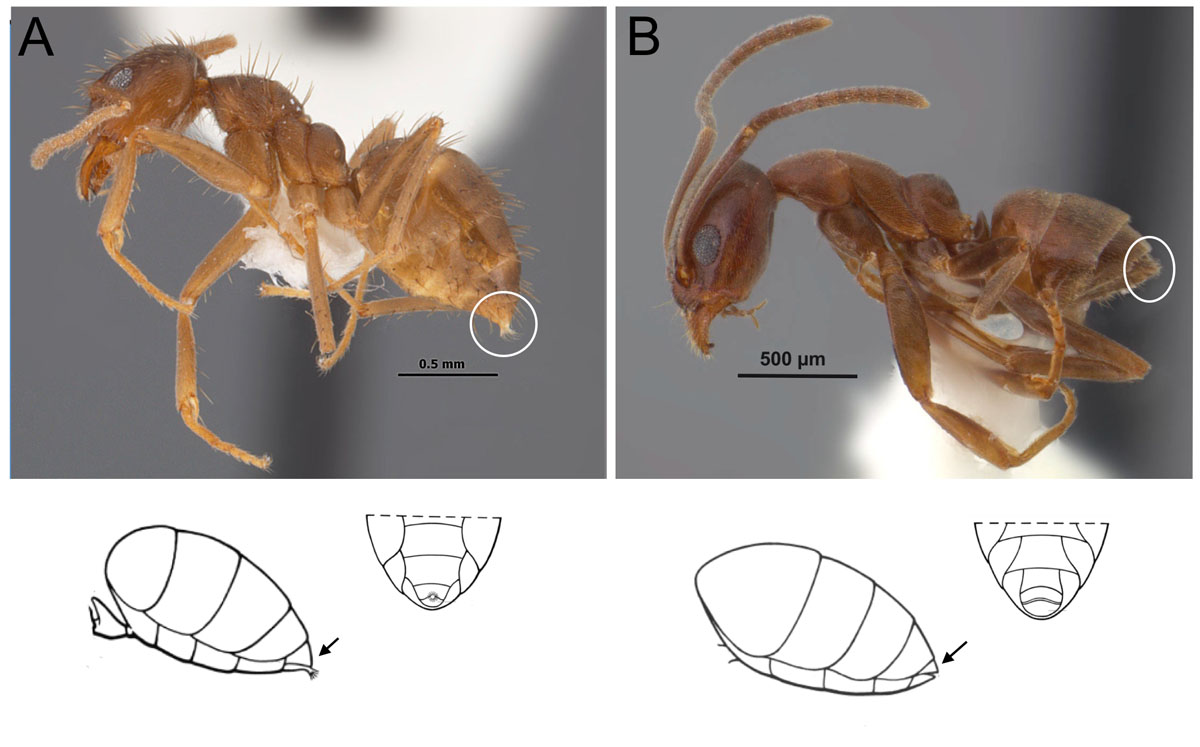 Figure 3. Gastral apex in lateral view. (A) Nylanderia fulva; (B) Linepithema humile.
4 (3) Antenna 9-segmented; workers minute, about 1–2 mm (Fig. 4A) …..5
– Antenna 12-segmented; workers generally larger (Fig. 4B) …..6
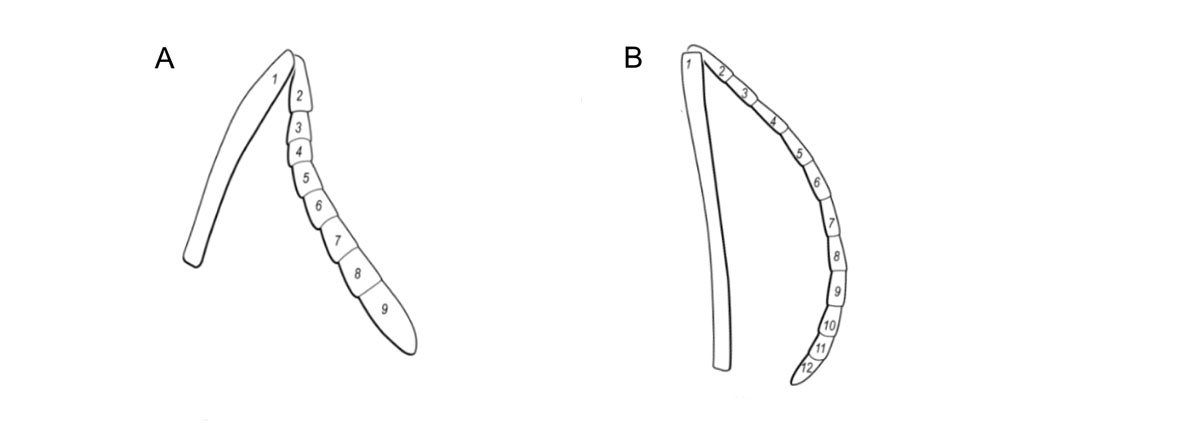 Figure 4. Antennae with (A) 9 and (B) 12 segments.
5 (4) Scape surpassing posterior head margin by approximately the combined length of pedicel and first funicular segment (Fig. 5A); mesonotum with one pair of erect setae; gastral pubescence sparse (Fig. 5B) ….. Brachymyrmex patagonicus (dark rover ant)
– Scape only slightly surpassing posterior head margin (Fig. 5C); mesonotum without paired erect setae; gastral pubescence dense (Fig. 5D) …..Brachymyrmex obscurior (obscure rover ant)
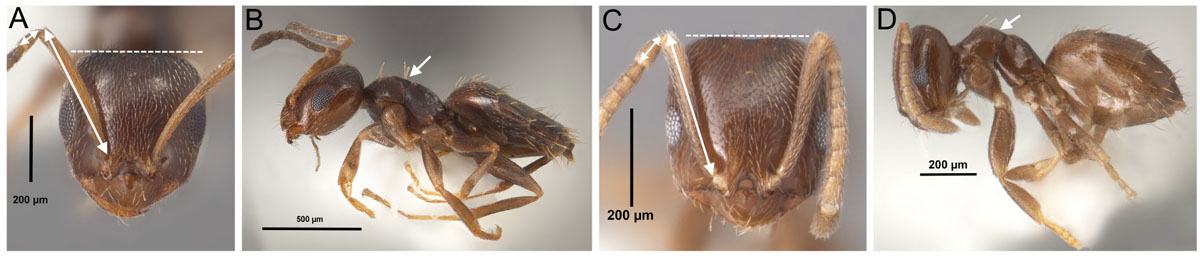 Figure 5. Head in full-face view and body in lateral view. (A, B) Brachymyrmex patagonicus;
(C, D) Brachymyrmex obscurior.
6 (4) Antennal insertions well behind posterior clypeal margin (Fig. 6A); workers polymorphic; metanotal depression indistinct…..7
– Antennal insertions close to posterior clypeal margin (Fig. 6B); workers monomorphic; metanotal groove distinct…..8
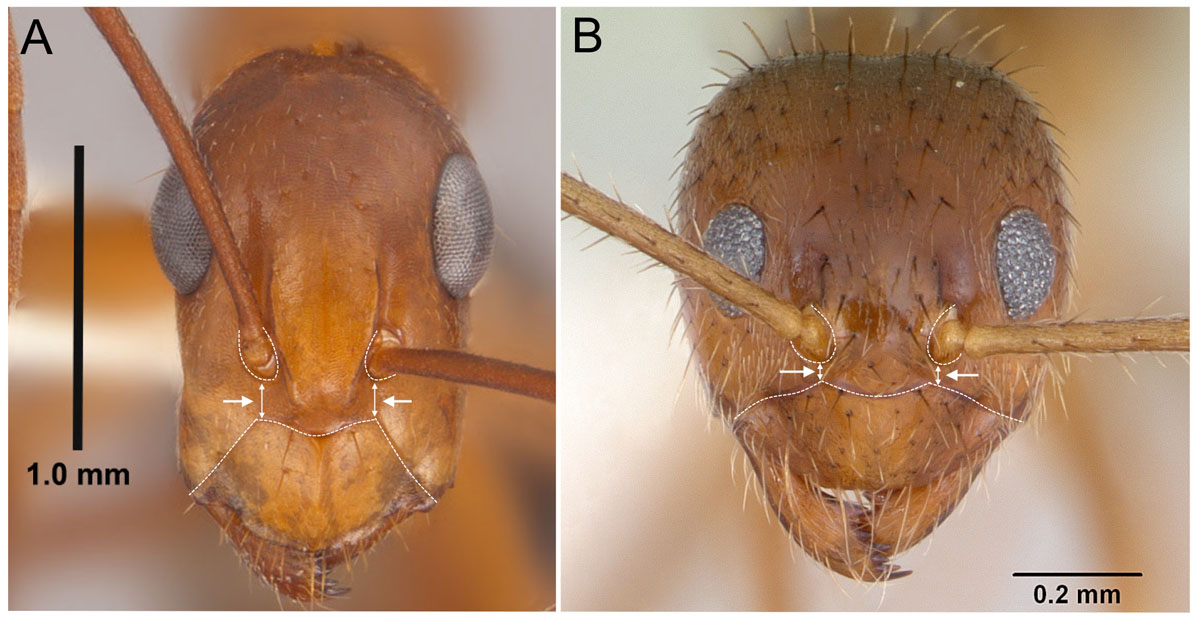
Figure 6. Head in full-face view. (A) Camponotus tortuganus; (B) Nylanderia fulva.
7 (6) Workers smaller (minors 3.5–4.0 mm; majors 5.0–6.0 mm); head in full-face view about as broad as long, widest posteriorly and narrowing anteriorly (Fig. 7A); mesosoma compact, humeral angles distinct; abundant long, whitish erect setae (Fig. 7B) …..Camponotus planatus (compact carpenter ant)
– Workers larger (minors 6.5–8.0 mm; majors 8.5–10.0 mm); head distinctly longer than broad (Fig. 7C); mesosoma elongate, humeral angles rounded; head, especially cheeks, with fewer erect setae; body relatively shiny (Fig. 7D) .…Camponotus cf. tortuganus (Tortugas carpenter ant)

Figure 7. Head in full-face view and body in lateral view. (A, B) Camponotus planatus; (C, D) Camponotus cf. tortuganus.
8 (6) Scapes and legs extremely long (Fig. 8A); body slender; scapes lacking conspicuous erect macrosetae; body usually dark brown to blackish (Fig. 8B) …..Paratrechina longicornis (longhorn crazy ant)
– Scapes and legs shorter (Fig. 8C); body more robust; scapes with conspicuous erect macrosetae; body generally reddish brown (Fig. 8D) …..Nylanderia fulva (tawny crazy ant*)
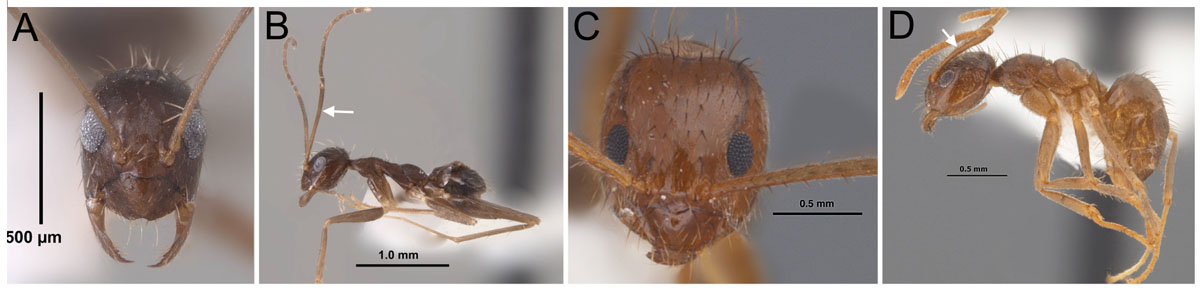
Figure 8. Head in full-face view and body in lateral view. (A, B) Paratrechina longicornis; (C, D) Nylanderia fulva.
9 (3) Petiole strongly reduced, without an upright node and usually hidden beneath anterior gaster; head and mesosoma dark brown, gaster and legs conspicuously pale (Fig. 9A, B) …..Tapinoma melanocephalum (ghost ant)
– Petiole with a distinct upright scale visible in profile, not concealed by gaster; body relatively uniformly brown (Fig. 9C, D) …..Linepithema humile (Argentine ant)

Figure 9. Head in full-face view and body in lateral view. (A, B) Tapinoma melanocephalum; (C, D) Linepithema humile.
10 (2) Tergite of abdominal segment IV with coarse longitudinal costae; hind coxa with dorsal spine; pretarsal claw with subapical tooth (Fig. 10A, B) …..Poneracantha triangularis (South American grooved ant) [Ectatomminae]
– Tergite of abdominal segment IV smooth or finely sculptured, lacking strong longitudinal costae; hind coxa without dorsal spine (Fig. 10C, D) …..11
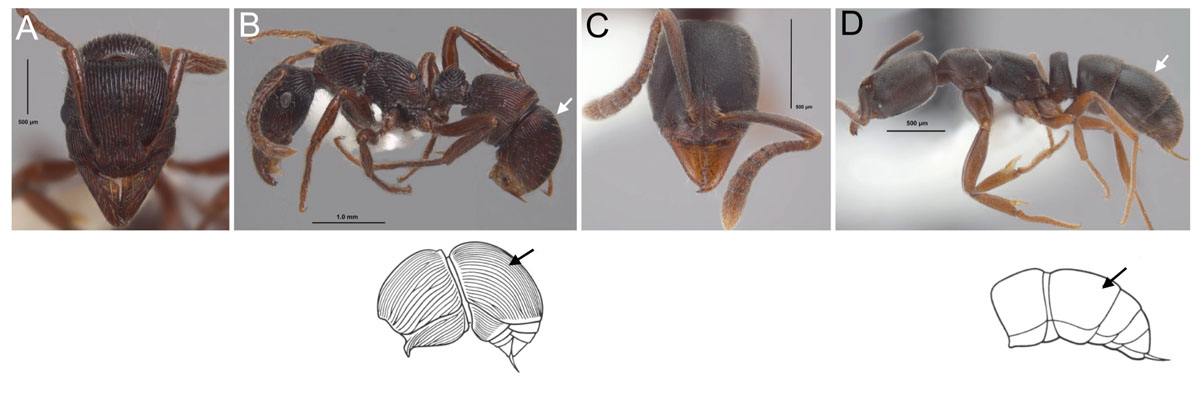
Figure 10. Head in full-face view and body in lateral view. (A, B) Poneracantha triangularis;
(C, D) Hypoponera opaciceps
11(10) Mandibles very long and linear, inserted close together near middle of anterior head margin (Fig. 11A); petiolar node with prominent terminal spine; workers large, about 9–11 mm (Fig. 11B) …..Odontomachus haematodus (two-spined trap-jaw ant)
– Mandibles triangular, inserted near anterolateral corners of head (Fig. 11C); petiole without elongate terminal spine (Fig. 11D); workers smaller .....12
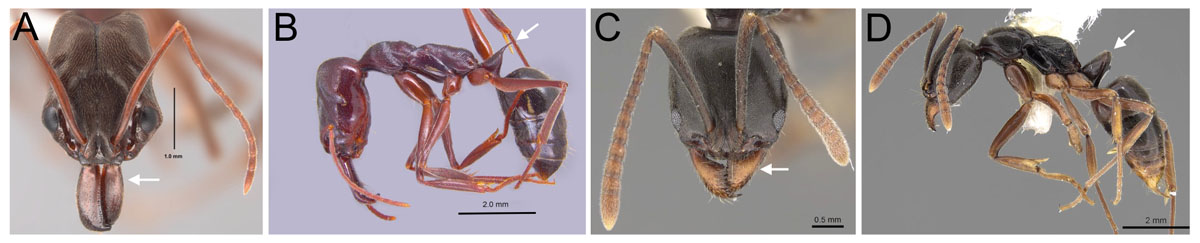
Figure 11. Head in full-face view and body in lateral view. (A, B) Odontomachus haematodus; (C, D) Brachyponera chinensis.
12 (11) Workers relatively large, about 4–5 mm; eyes small but distinct (Fig. 12A); body dark brown to blackish;promesonotum distinctly differentiated from propodeum (Fig. 12B) …..Brachyponera chinensis (Asian needle ant)
– Workers smaller, usually 2–3 mm; eyes minute, with few facets; promesonotum not strongly differentiated from propodeum (Fig. 12C) .....13
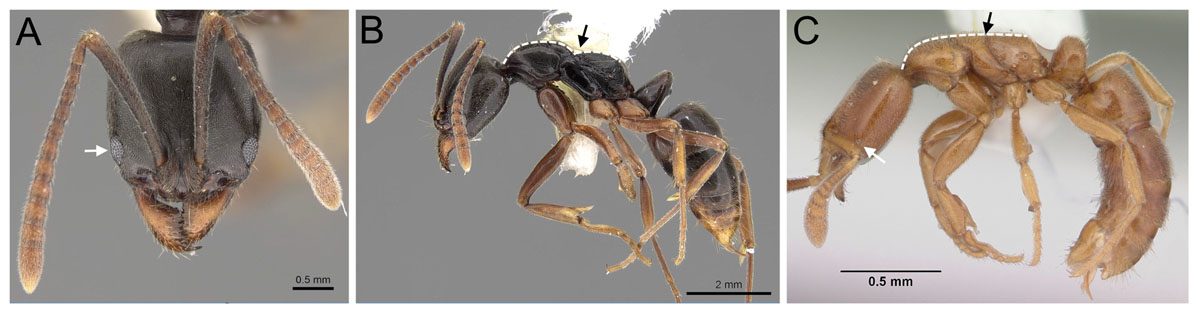
Figure 12. Head in full-face view and body in lateral view. (A, B) Brachyponera chinensis; (C) Hypoponera punctatissima.
13 (12) Mesopleuron partly to entirely granulate or punctate; body densely punctate-granulate, dull to subopaque; anterior and posterior faces of petiolar node nearly parallel (Fig. 13A, B) …..Hypoponera opaciceps (granulate mini-ponerine ant)
– Mesopleuron mostly smooth and shiny; body generally more shining; petiolar node relatively high and short in profile (Fig. 13C, D) …..Hypoponera punctatissima (pantropical mini-ponerine ant)
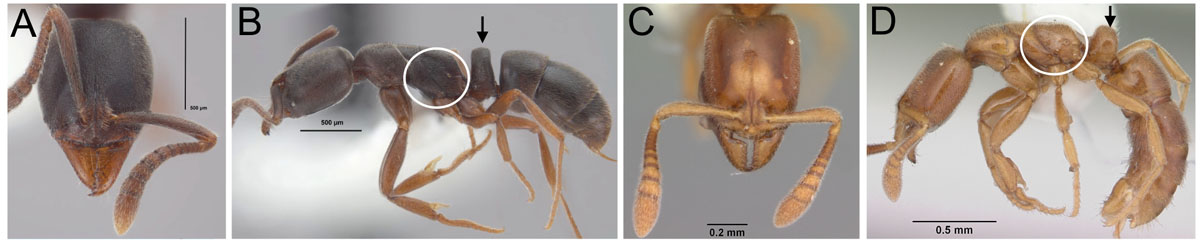
Figure 13. Head in full-face view and body in lateral view. (A, B) Hypoponera opaciceps; (C, D) Hypoponera punctatissima.
14 (1) Antenna 6-segmented; workers minute, often with specialized hairs and spongiform tissue on waist (Fig. 14A) …..15
– Antenna 10–12-segmented; combination of characters otherwise not as above (Fig. 14B, C) …..19
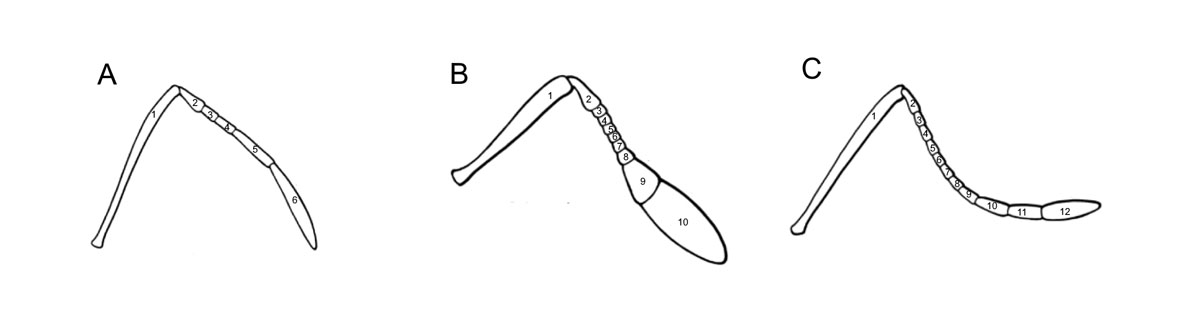
Figure 14. Antennae with (A) 6, (B) 10, and (C) 12 segments.
15 (14) Mandibles long and narrow, sublinear to linear, touching only near apices when closed (Fig. 15A) …..16
– Mandibles triangular to elongate-triangular, meeting along at least apical half when closed (Fig. 15B) …..17
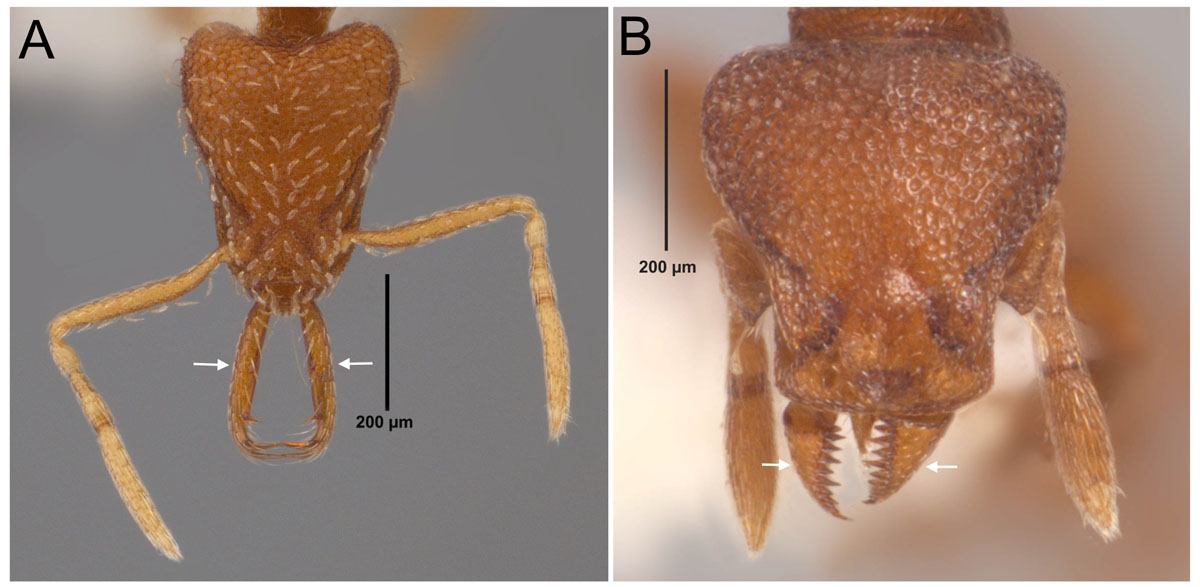
Figure 15. Head in full-face view. (A) Strumigenys silvestrii; (B) Strumigenys membranifera.
16 (15) Apicodorsal mandibular teeth extremely long, crossing opposite mandible; facial hairs large, flat, and circular; scapes short (Fig. 16A, B) …..Strumigenys hexamera (Japanese mini trap-jaw ant)
– Apicodorsal teeth shorter and not crossing; one elongate preapical tooth; facial hairs clavate; scapes longer (Fig. 16C, D) …..Strumigenys silvestrii (Silvestri’s mini trap-jaw ant)

Figure 16. Head in full-face view and body in lateral view. (A, B) Strumigenys hexamera; (C, D) Strumigenys silvestrii.
17 (15) Ventral petiole without spongiform tissue; first gastral tergite densely sculptured throughout (Fig. 17A, B) …..Strumigenys margaritae (Margaret’s mini trap-jaw ant)
– Ventral petiole with conspicuous spongiform tissue; first gastral tergite mostly smooth beyond basal costulae (Fig. 17C) …..18
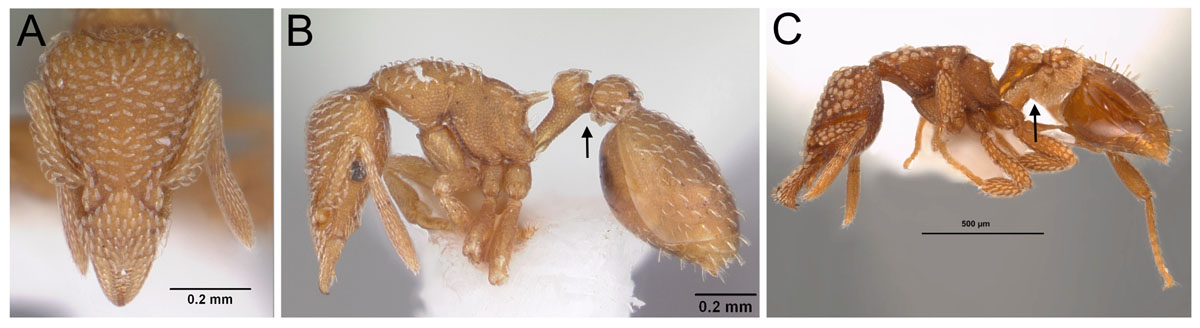
Figure 17. Head in full-face view and body in lateral view. (A, B) Strumigenys margaritae; (C) Strumigenys epinotalis.
18 (17) Mandibles lacking basal transverse rim (Fig. 18A); pronotum with a curved row of spoon-shaped hairs on arched transverse ridge (Fig. 18B) …..Strumigenys epinotalis (tree-hole mustache ant)
– Mandibles with sharp basal transverse rim immediately anterior to clypeal margin (Fig. 18C); pronotum without such a row of hairs (Fig. 18D) …..Strumigenys membranifera (membranous mini trap-jaw ant)
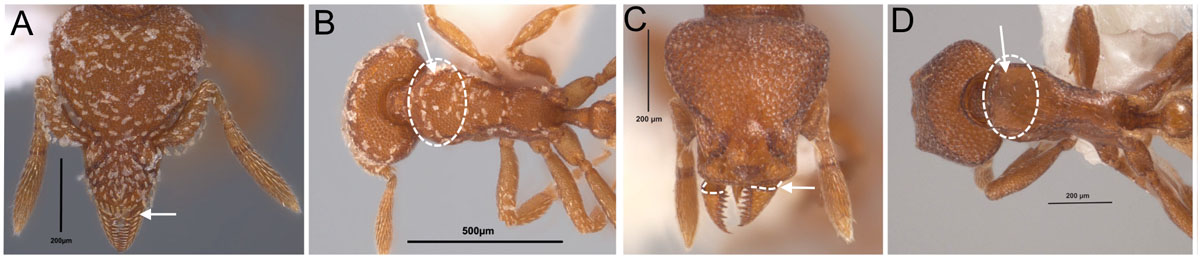
Figure 18. Head in full-face view and body in lateral view. (A, B) Strumigenys epinotalis; (C, D) Strumigenys membranifera.
19 (14) Antenna 10- or 11-segmented (Fig. 19A, B) …..20
– Antenna 12-segmented (Fig. 19C) …..22
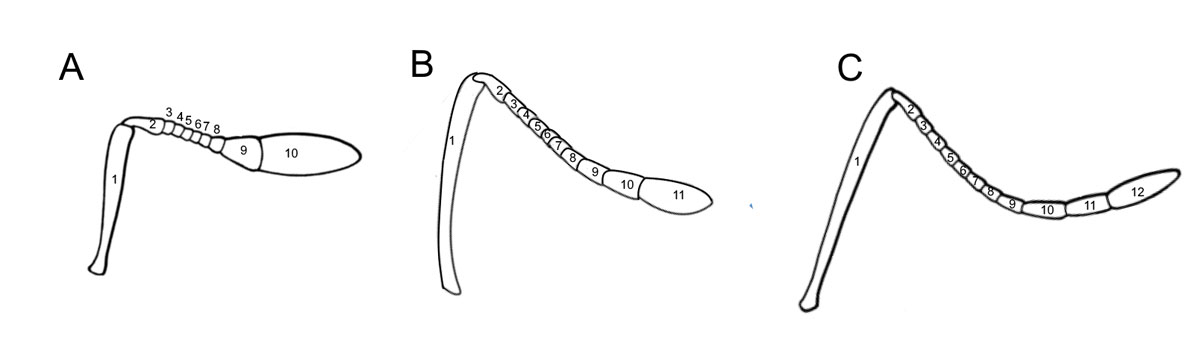
Figure 19. Antennae with (A) 10, (B) 11, and (C) 12 segments.
20 (19) Antenna 10-segmented; workers polymorphic; body without scale-like hairs (Fig. 20A, B) .....21
– Antenna 11-segmented; workers monomorphic, with appressed scale-like hairs; frontal lobes expanded; mesosoma tuberculate (Fig. 20C, D) …..Cyphomyrmex rimosus (rimose fungus ant)
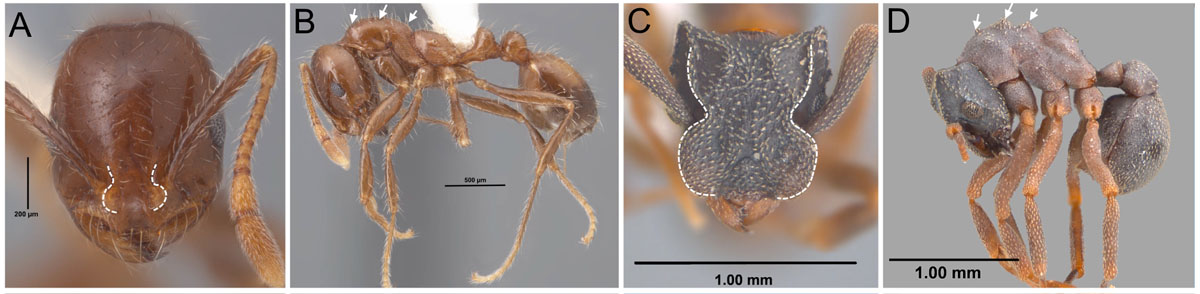
Figure 20. Head in full-face view and body in lateral view. (A, B) Solenopsis invicta; (C, D) Cyphomyrmex rimosus.
21 (20) Head and mesosoma usually reddish brown, gaster darker; scapes brown; pronotal humeral angles weak (Fig. 21A, B) …..Solenopsis invicta (red imported fire ant)
– Head and mesosoma dark brown to blackish; scapes black; pronotal humeral angles distinct (Fig. 21C, D) .....Solenopsis richteri (black imported fire ant)
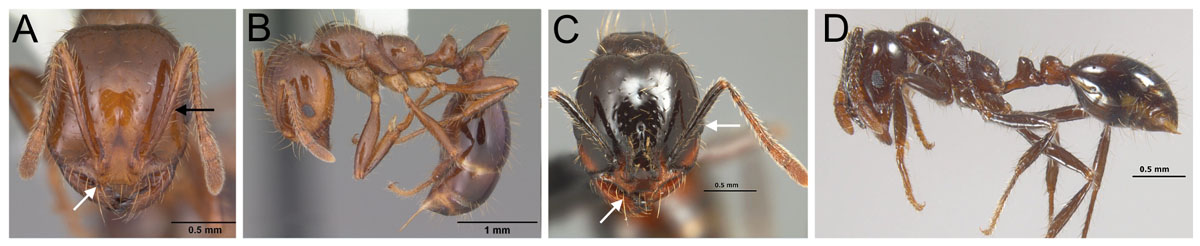
Figure 21. Head in full-face view and body in lateral view. (A, B) Solenopsis invicta; (C, D) Solenopsis richteri.
22 (19) Body elongate and slender; eyes large and elongate; frontal carinae close together, antennal insertions nearly touching (Fig. 22A, B) ..…Pseudomyrmex gracilis (graceful twig ant)
– Body more compact; eyes smaller; frontal carinae and antennal insertions more widely separated (Fig. 22C, D) …..23
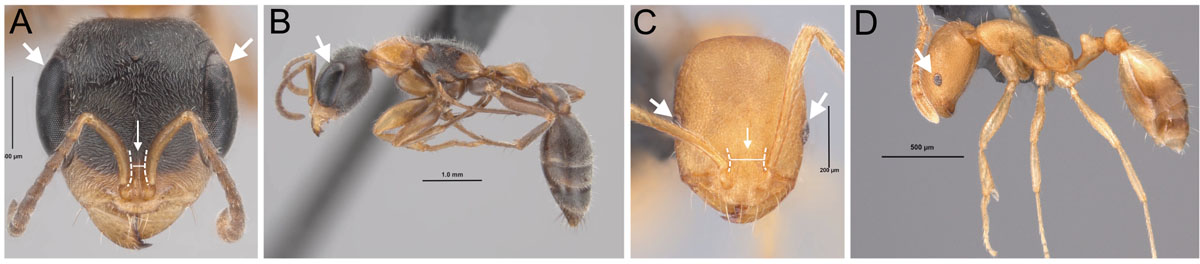
Figure 22. Head in full-face view and body in lateral view. (A, B) Pseudomyrmex gracilis; (C, D) Monomorium pharaonis.
23 (22) Propodeum unarmed, without spines or teeth (Fig. 23A) .….24
– Propodeum with a pair of distinct spines or teeth (Fig. 23B) …..25
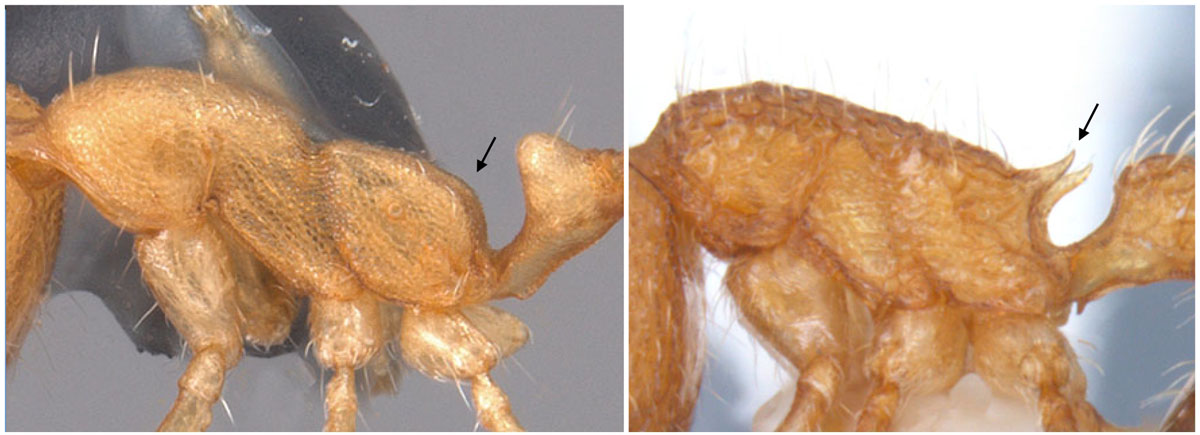
Figure 23. Mesosoma in lateral view. (A) Monomorium pharaonis; (B) Tetramorium bicarinatum.
24 (23) Body yellow to golden yellow, posterior gaster usually darker; petiolar node relatively high and narrow (Fig. 24A, B) ..…Monomorium pharaonis (pharaoh ant)
– Body distinctly bicolored, head and gaster dark, mesosoma yellow to orange-brown; petiolar node lower and broader (Fig. 24C, D) .....Monomorium floricola (flower ant)

Figure 24. Head in full-face view and body in lateral view. (A, B) Monomorium pharaonis; (C, D) Monomorium floricola.
25 (23) Lateral clypeal margins immediately anterior to antennal insertions raised into distinct sharp carinae, partially enclosing antennal sockets (Fig. 25A); middle and hind tibial spurs simple or absent; petiolar node rounded to subquadrate in profile .....26
– Lateral clypeal margins anterior to antennal insertions flat or weakly elevated, without sharp carinae around antennal sockets (Fig. 25B); if clypeal ridges present, middle and hind tibial spurs pectinate and petiolar node triangular in profile .....28
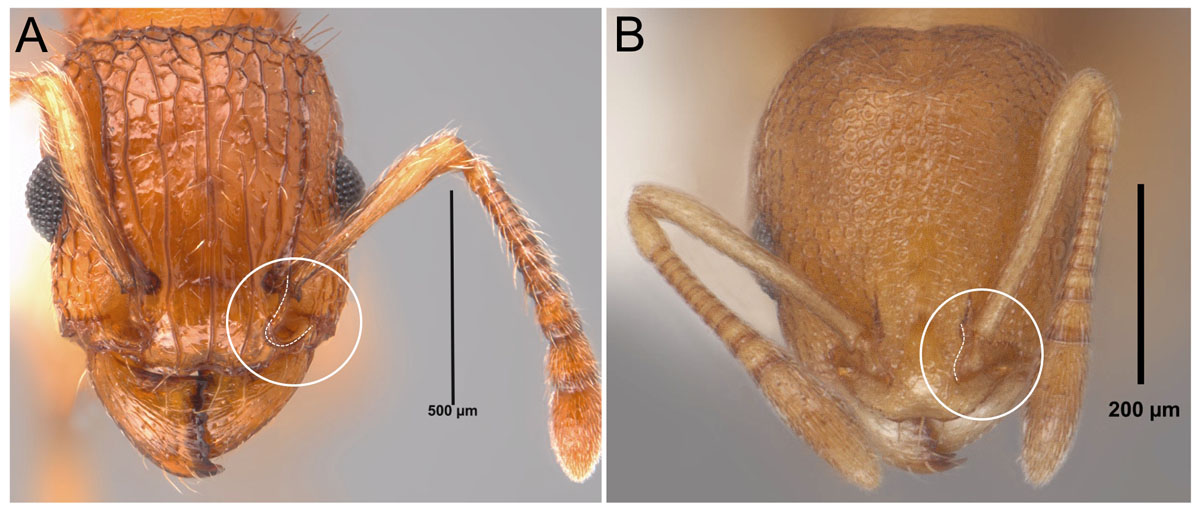
Figure 25. Head in full-face view. (A) Tetramorium bicarinatum; (B) Cardiocondyla wroughtonii.
26 (25) Dorsal setae dense, many bifid or trifid, giving body a woolly appearance (Fig. 26A, B) .….Tetramorium lanuginosum (woolly pavement ant)
– Dorsal setae simple, never branched (Fig. 26C, D) …..27

Figure 26. Head in full-face view and body in lateral view. (A, B) Tetramorium lanuginosum; (C, D) Tetramorium immigrans.
27 (26) Head and mesosoma yellow- to orange-brown, contrasting with dark gaster; mandibles with conspicuous longitudinal striae; posterior head coarsely reticulate (Fig. 27A, B) ..…Tetramorium bicarinatum (bicolored pavement ant)
– Body more uniformly reddish to dark brown; mandibles without conspicuous longitudinal striae; posterior head predominantly with longitudinal rugae (Fig. 27C, D) ..…Tetramorium immigrans (immigrant pavement ant)

Figure 27. Head in full-face view and body in lateral view. (A, B) Tetramorium bicarinatum; (C, D) Tetramorium immigrans.
28 (25) Anterior clypeal margin with a single long median seta projecting over mandibles; lateral clypeal portions flattened and projecting over mandibular bases (Fig. 28A); postpetiole broadly rounded and wider than petiole in dorsal view (Fig. 28B); head and mesosoma without erect setae; body yellowish brown, first gastral tergite often darkened .....Cardiocondyla wroughtonii (Wroughton’s sneaking ant)
– Anterior clypeal margin lacking a single projecting median seta; lateral clypeal portions not projecting over mandibular bases (Fig. 28C); postpetiole variable (Fig. 28D); erect setae usually present on head and mesosoma; workers typically dimorphic, majors with enlarged heads .....29
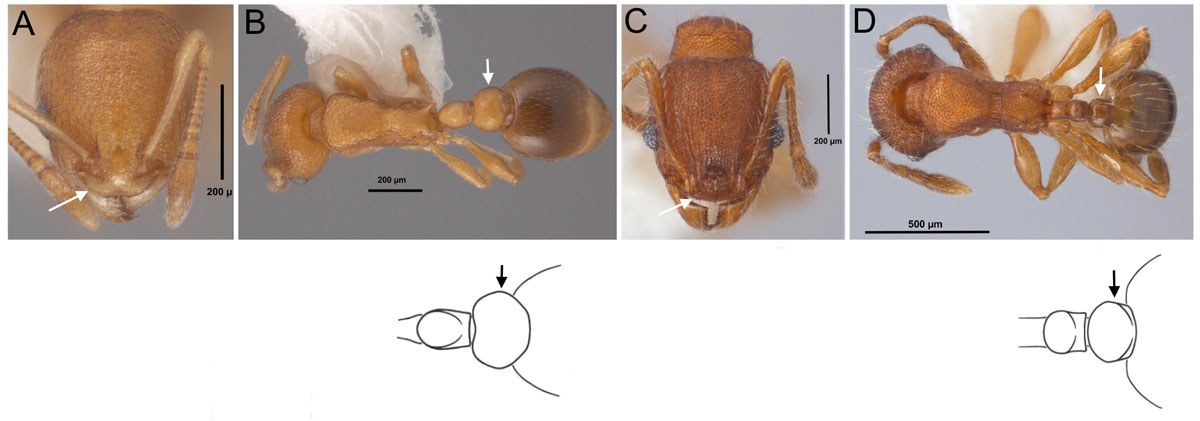
Figure 28. Head in full-face view and body in dorsal view. (A, B) Cardiocondyla wroughtonii; (C, D) Pheidole navigans.
29 (28) Major: Large (5–6 mm); head densely rugoreticulate, antennal scrobes absent (Fig. 29A). Minor: Head smooth and shiny, posterior margin strongly convex; scapes extending beyond posterior head margin by more than twice eye length (Fig. 29B); pronotum raised above mesonotum, producing a stepped profile (Fig. 29C) ….. Pheidole obscurithorax (dark-bodied big-headed ant)
– Major: Small (2–3 mm); head predominantly longitudinally rugose; antennal scrobes narrow, shallow, and smooth (Fig. 29D). Minor: Head densely punctate and dull; scapes barely surpassing posterior head margin (Fig. 29E); promesonotum evenly convex, without a distinct step (Fig. 29F) ….. Pheidole navigans (navigating big-headed ant)
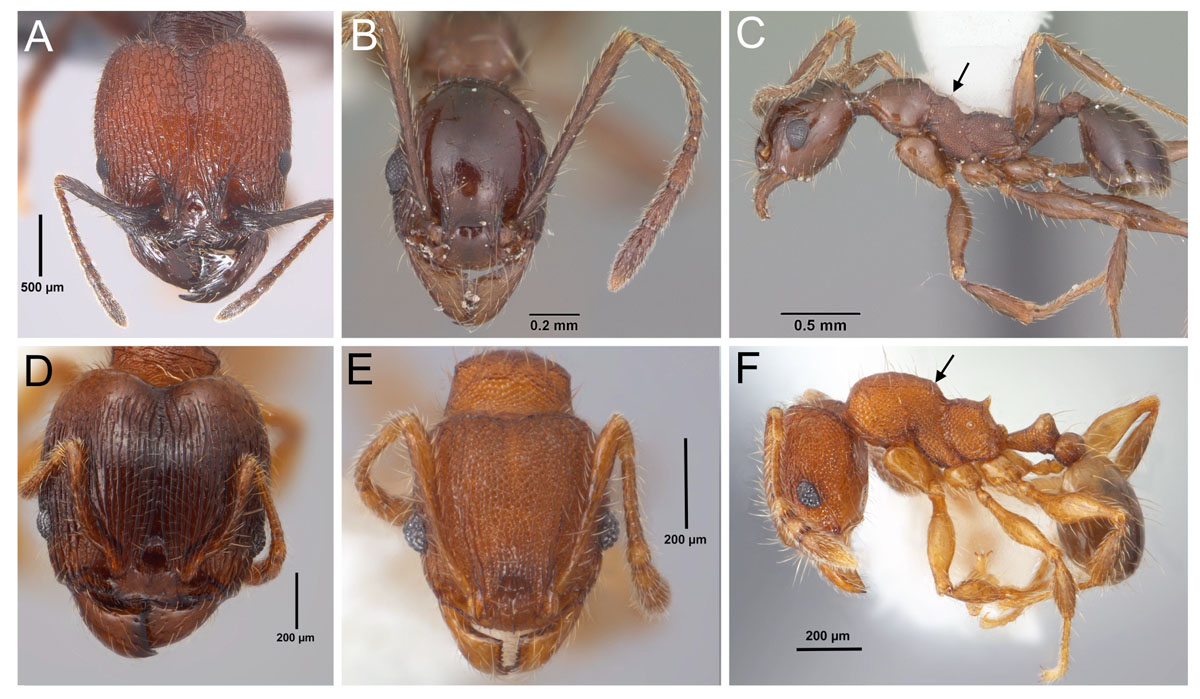
Figure 29. Head in full-face view and mesosoma in lateral view. (A–C) Pheidole obscurithorax; (D–F) Pheidole navigans.
Acknowledgments
Thanks to the various inidivuals who collected ants and helped prepare specimens for this project ranging from researchers, students, pest control operators, and home owners. MEM research was supported in part by the USDA-ARS Areawide Management of Areawide Management of Invasive Ants Project (J.G.Hill Principal Investigator). Photographs used provided by Antweb.org and the Mississippi Entomological Museum.
References
MacGown, J. A., R. L. Brown, J. G. Hill, R. Whitehouse, and J. G. Lewis. 2021. Exotic ants (Hymenoptera: Formicidae) of Mississippi. Mississippi Agricultural and Forestry Experiment Station Bulletin 1229. Mississippi State University.
Deyrup, M. 2017. Ants of Florida: Identification and Natural History. CRC Press, Boca Raton, Florida.
AntWiki. Key to US Strumigenys species.
